Is laser eye color change procedure really safe? Here’s what’s important to know
What does the procedure include?
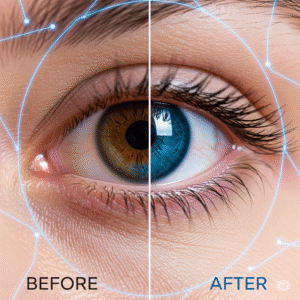
First of all, the FLAAK-KERATO method uses a precise robotic laser to create a tunnel in the cornea. The doctor then injects pigment in the shade the patient chooses. In addition, the procedure does not involve invasive surgery and does not penetrate the deep layers of the eye. Furthermore, the doctor performs the treatment with local anesthesia using drops only.
What are the possible risks?
As with any medical procedure, there are risks here too. However, when a specialist performs the procedure, the chances of complications remain minimal. for example:
- The body may develop a rare reaction to the pigment.
- Patients may discover inconsistencies, so thorough tests must be performed in advance.
- There may be dryness or discomfort in the first few days after the procedure.
How do you know the procedure is safe?
In fact, several factors affect the level of safety. First, the doctor uses advanced technology such as the ZEISS VISUMAX 800 robot, which is considered one of the most accurate in the world. In addition, only senior ophthalmologists in France and Switzerland perform the procedure. Furthermore, patients undergo comprehensive medical examinations in Israel before receiving final approval.
Comparison to temporary color lenses
Many believe that temporary color lenses offer a simple solution, but in reality they pose significant risks. for example:
- Corneal injury
- Inflammations and infections
- Daily discomfort
Therefore, laser color change is a permanent, painless solution that is independent of lenses.